Ergodic Theory
SS 2026
Lectures: Di 15:15-16:45, 17:15-18:45 in SG 2-14 (by Tanja Eisner)
Seminar: Do 11:15-12:45 in P-701 (by Henrik Kreidler)
Requirements: analysis and measure theory; basic knowledge of functional analysis
Description
Motivated by questions in statistical mechanics and the so-called Boltzmann ergodic hypothesis, ergodic theory was founded as a mathematical discipline in 1931 when von Neumann and Birkhoff proved the classical ergodic theorems. Since that time ergodic theory found connections with and applications in many areas of mathematics including number theory, stochastics, dynamical systems, functional analysis, group theory and harmonic analysis.
In the first half of the lecture course the basics of ergodic theory will be presented such as ergodicity and minimality, recurrence, classical ergodic theorems and their applications, mixing properties. The second half of the course will be devoted to Furstenberg's ergodic theoretic proof of Szemerédi's theorem on the existence of arithmetic progressions in large sets of natural numbers.
Notes
7-14.4., 21.-28.4., 5-12.5., 19-26.5., 2-9.6., 16-23.6., 30.6.-7.7.
Exercise sheets
Blatt 1, Blatt 2, Blatt 3, Blatt 4, Blatt 5, Blatt 6, Blatt 7
Talks schedule
04.06.: The Halmos-von Neumann theorem (Kevin Schneider)
15.06. (Monday, 13:15): Equidistribution (Thomas Gerzen)
18.06.: Entropy for measure-preserving systems (Magdalena Rambau)
25.06.: Subsequential ergodic theorems (Lennart Buchwald)
02.07.: Weighted ergodic theorems (Moritz Sommer)
09.07.: Ergodic Theorems on von Neumann algebras (Abhijeet Vats)
Literature
- K. Petersen, "Ergodic Theory", Cambridge University Press,
Cambridge, 1989.
- T. Eisner, B. Farkas, "A Journey through Ergodic Theory", Birkhäuser Advanced Texts Basler Lehrbücher, Birkhäuser Verlag, 2025.
- T. Eisner, B. Farkas, M. Haase, R. Nagel, "Operator Theoretic
Aspects of Ergodic Theory", Graduate Texts in Mathematics, Springer, 2015.
- M. Einsiedler, T. Ward, "Ergodic Theory with a view towards Number
Theory", Graduate Texts in Mathematics, 259, Springer-Verlag London,
Ltd., London, 2011.
- H. Furstenberg, "Recurrence in ergodic theory and combinatorial
number theory",
Princeton University Press, Princeton, N.J., 1981.
- T. Tao, "Ergodic Theory", see
http://terrytao.wordpress.com/category/254a-ergodic-theory/ or
http://terrytao.wordpress.com/books/poincares-legacies-course-notes-expository-articles-and-lecture-series-from-a-mathematical-blog/.
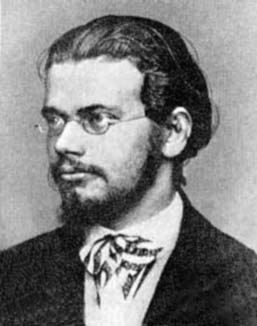
Ludwig Boltzmann
|
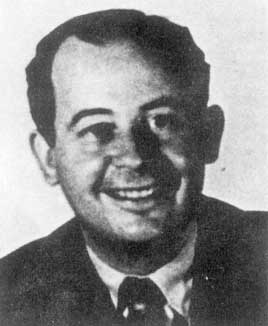
John von Neumann
|
George Birkhoff
|
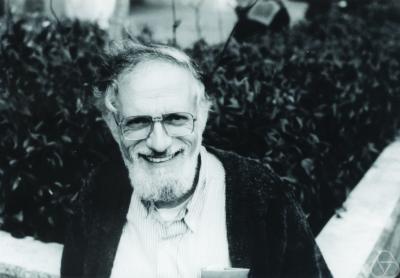
Hillel Furstenberg
|